WHAT IS DIRECT RESPONSE MARKETING?
Well, it’s the grandfather of the modern Call-To-Action strategy, and began at the turn of the 20th century.

Direct Response Marketing
Pretty much all marketing activity online that you will see will be full of different appeals to response they want their audience to take. Put differently – they provoke in their prospective customer an action that they want them to take. This is what we call Direct Response Marketing.
Main Takeaways
- Claude Hopkins – around 1907 this man used an advertising campaign that is probably one of the main reasons why we all clean our teeth at least once a day.
- Measurable outcomes – an important part of Direct Response Marketing is that you want to be able to measure the outcome that you want your marketing to produce.
- Reward-based marketing – Your marketing becomes about cueing an action, and then promoting the reward an audience will get when they perform that action.
Reach your marketing goals.
Call to Action as a Modern Direct Response Marketing Strategy
Notice our little banner at the top there, where we are encourage your to ‘Reach out to our team’? That’s a Call to Action. The reward we are offering is you can reach your marketing goals – the action we are cuing is for you to ‘Get in touch with our team’.
We write these blogs partly because blogs are good way to help with Search Engine Optimisation, and because it does a good job of reinforcing your brand identity. We do those things so we can generate leads – so our blogs should include calls to action.
This is probably not new to you.
And neither is this principle – while we mostly talk about Call To Action nowadays, the bigger principle at play is Direct Response Marketing.
Claude Hopkins and Pepsodent
Direct Response Marketing had it’s introduction into the world of marketing through Claude Hopkins, who in 1907 joined the advertising campaign of a toothpaste company called Pepsodent.
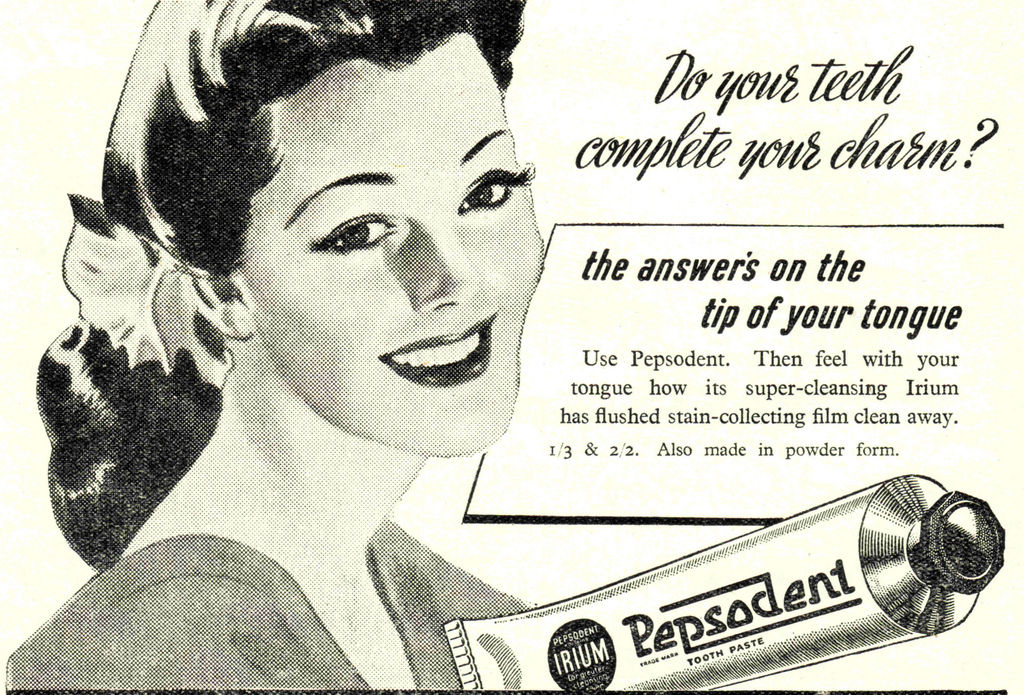

Hopkins had to somehow make people want to buy something they didn’t feel they needed. So, he made it about beauty standards, rather than health.
Specifically, he told people that if you lick your teeth, you feel a film on them.
Incorrectly he told them that this was why they needed to use the ‘super-cleansing’ Irium in Pepsodent to get rid of it, and ensure that they would have a wonderful smile!